Tuesday 20 Jan 2026
Dr McConochie began by questioning how accurately we estimate mature bodyweights. Historically, producers have used cull weights to estimate the herd’s typical mature weight; however, this is flawed since cull cows are outliers, no longer productive in that dairy system. Dr McConochie said, “Estimating a cow’s mature body weight by eye is impossible, just as it is to estimate body composition.” Accurate bodyweights at different lactation stages are crucial for correct rationing due to their impact on nutrient demand.
Building muscle for lactation success
Dr McConochie challenged attendees to rethink how they assess mature body weight and muscle development in their herds.
We must consider age of first service in replacement heifers. “When should we be breeding our heifers? Are they grown well enough? Are they too fat or too thin, and have they built enough muscle?” These factors all influence breeding age decisions.
“A heifer’s ability to build muscle during growth directly impacts her milk production potential in the first lactation,”
Dr McConochie explained.
Heifers with insufficient muscle are more prone to bullying, reduced feed access, and lower milk yields. Muscle tissue also serves as a critical energy reserve during early lactation when energy demands are highest.
Currently, it’s difficult to differentiate between fat and muscle on-farm and impossible to do by eye. Dr McConochie encouraged producers to consider tools such as muscle depth ultrasound scanning. Research from Purdue University shows that cows with greater muscle reserves prepartum mobilise more muscle during early lactation, resulting in higher milk yields. This highlights the importance of balanced diets with adequate concentrates and high-quality protein to support muscle growth.
Practical takeaways for producers
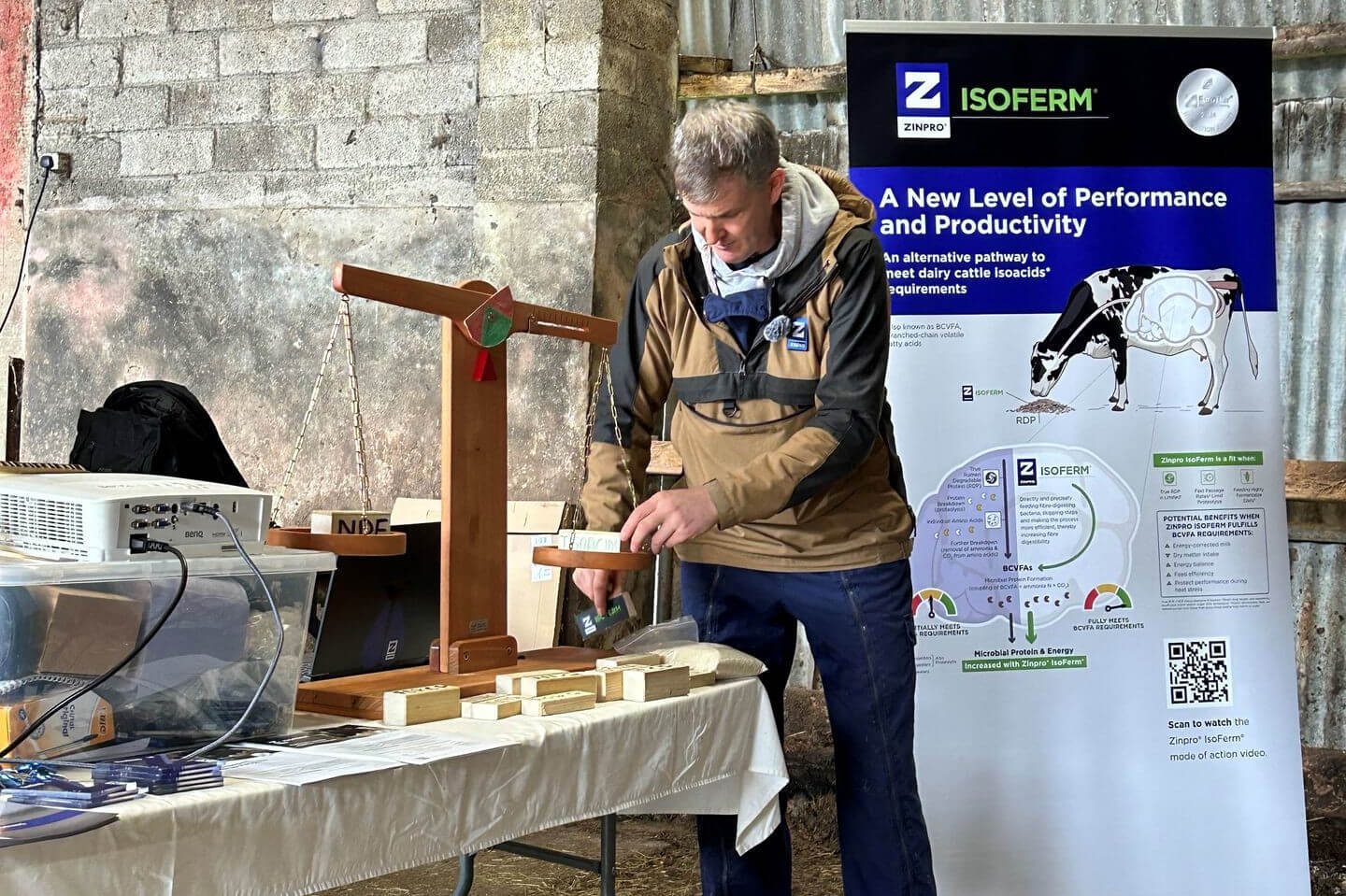
- Feed the rumen First: Prioritise rumen health by supplying essential nutrients like BCVFA through Zinpro IsoFerm. This supports fibre-digesting bacteria, enhances protein and energy utilisation, and improves overall cow performance.
- Focus on muscle development: Ensure heifers receive balanced diets with sufficient protein and energy to build muscle reserves, setting the foundation for higher yields and better health in first lactation.
- Measure, don’t guess: Regularly weigh cows and consider tools like muscle depth scanning to assess body weight and muscle reserves accurately. This data is crucial for precise rationing and optimising performance.
By adopting a “Rumen First” approach and prioritising muscle tissue deposition in heifers, producers can unlock the full potential of their herds. These strategies not only improve milk production but also enhance welfare and long-term profitability.
For more information, please contact Crediton Milling: cmc@creditonmilling.co.uk or 01363 772212.