Wednesday 01 Apr 2026
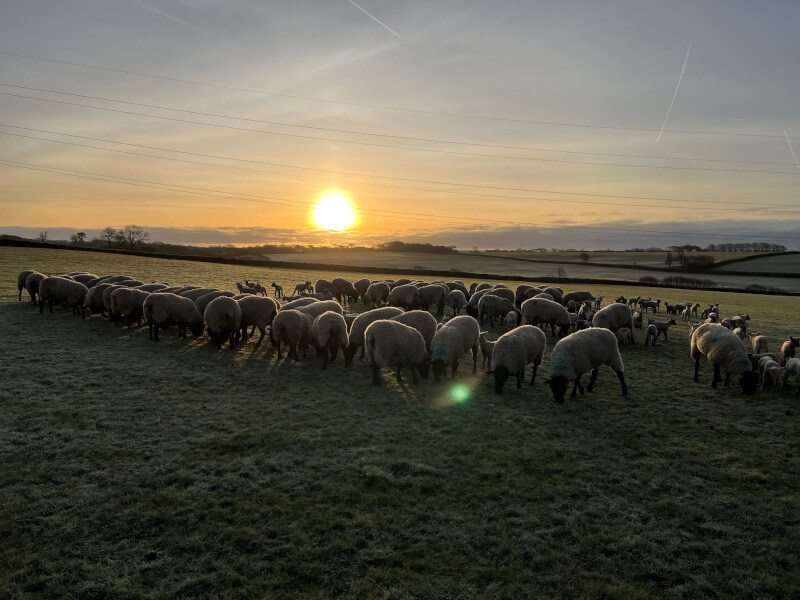
From November onwards on an average year, grass growth is minimal and for those farms that are stocked relatively heavy, it can be a challenge keeping good quality grass in front of both ewes and lambs. Brassica and root crops can help fill gaps providing your farm is on light enough soil and are able to get good utilisation of these forage crops. The weather is the biggest dictator of performance, prolonged wet weather reduces the dry matter intake of ewes which can then have a knock-on effect on their milk yield meaning lambs which aren’t being supplemented with hard feed can suffer in their performance, especially twins and triplets.
You would expect to see a lift in growth rates and more consistent weight gain over a lamb’s lifetime when they are being supplement fed creep feed. Where done correctly it allows for lambs to be off farm sooner and reduces their exposure to parasites which even on well managed flocks can end up with increased mortality or stunted performance and the added cost of parasite control thereafter.
Creep feeding also reduces pressure on the ewe. By shifting part of the nutrient demand from milk to concentrate, ewe body condition loss is reduced, especially in high-output ewes rearing twins or triplets. Taking the pressure off the ewe can lead to better ewe recovery post-weaning and improved fertility at the next breeding cycle.
Another major benefit is rumen development. Introducing concentrates early accelerates rumen papillae development, which improves the feed efficiency later in that lamb’s life. Lambs that receive creep feed transition more smoothly at weaning, with fewer growth checks. This is particularly important in early weaned or intensive finishing systems.
To achieve the best results from supplementing lambs with concentrate feed please give them plenty of access to creep feeders. Where feed space is limited, you will restrict performance, encourage gauging which can upset the Rumen pH and end up with the bigger stronger lambs bullying the smaller lambs and the gap between the two gets bigger. Where done successfully, you will have more uniformed bunches of lambs which are more marketable and helps saves labour in the long run.
As mentioned before creep feeding is not a blanket recommendation. On high-quality, well managed leafy swards with good ewe milk output, the response can be minimal. Concentrate costs must be weighed against lamb price but where I see the best response is in early lambing flocks, multiple-bearing ewes, cold springs, or where grass supply is restricted.